Types of Tensile Fabric and Structure
October 05, 2026 By admin
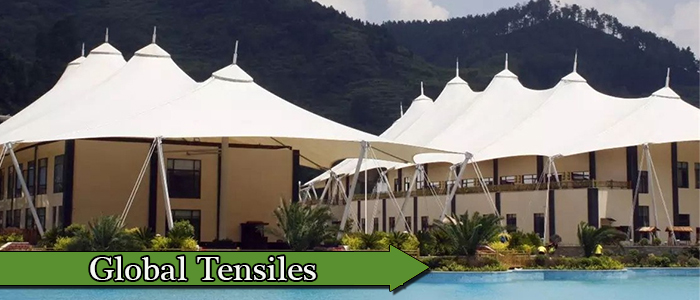
Types of Tensile Fabric and Structure
When we think of the contemporary building, what comes to our mind is smooth, lightweight constructions that do not seem to be subjected to any form of gravity. These spectacular designs tend to be tensile structures, which is a new way of construction involving the use of tensile fabric that is stretched over a structure by tensile means. These structures are changing our built environment, from beautiful pavilions to sensible tensile car parking designs. This guide will discuss the various tensile fabric types and tensile structures they form, such as the tensile walkway structure, which is specialized.
What Are Tensile Structures?
A tensile membrane structure (also known as tensile membrane construction) is a building in which the tensile force on the material or cloth is the main load carrier instead of compression (as in the case of traditional buildings). The cloth is pulled tightly around a frame, typically made of steel, aluminum, or cables, and forms durable, weatherproof, and appealing roofs and shelters. Their main success is in the specialized tensile cloth employed, which is designed to give strength, flexibility, and durability.
Types of Tensile Fabric Structure
The tensile structure is made up of fabric. The most frequent are the following:
- PVC-Coated Polyester
Ideal use: Mid-range budgets, temporary or semi-permanent structures.
Features: Waterproof, flexible, and very durable. Comes in a range of colors and may be printed with graphics.
Uses: Event tents, seasonal covers, and smaller shade sails. - PTFE-Coated Fiberglass
Best suited for: Permanent and large-scale architectural works.
Properties: It is very strong, fire-resistant, self-cleaning (rain always cleans it), and it permits diffused natural light.
Typical Applications: Airport terminals, stadium roofs, and large pavilions for the general population. - ETFE (Ethylene Tetrafluoroethylene) Foil
Best use: Lightweight and translucent cushion structures.
Characteristics: Lightest of all, high light transmission, high thermal insulation, and recyclable.
Typical Applications: Water centers, botanical gardens, rooftops, novel facade covering. - Mesh Fabrics (HDPE, PVC)
Best: Shade buildings where some sun and ventilation are required.
Properties: Offers UV protection and allows the passage of air and sunlight.
Typical Applications: Stadium spectators, playground covering, outdoor cantinas.
The leading companies in the fabric technology, such as Global Tensiles, usually come up with their own proprietary membranes, which blend the most desirable characteristics of those materials to be used on individual projects.
Types of Tensile Structures
The tensile structures may be divided into a number of types based on their design and use.
- Conical/Cone-Shaped Structures
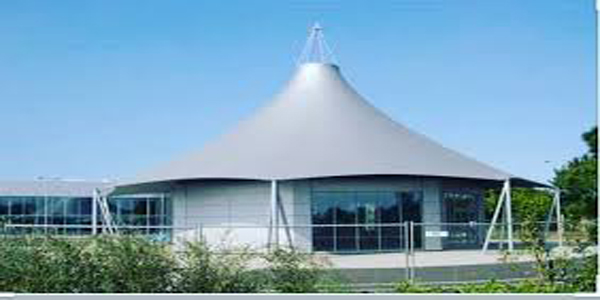
Construction: The cloth is stretched at one point of tension on a high point towards the center to a circular or polygonal point.
Best: To form dramatic focal points, entry canopies, or stand-alone gazebos. - Hyperbolic Paraboloid (Hyperbolic Paraboloid Structure) Buildings
Form: Has curved surfaces that are like saddles. Very stable and excellent at getting rid of rain and snow.
Most Ideal: Large span roofs in arenas, amphitheaters, and transportation centers. - Barrel Vault Structures
Design: The design is a long, tunnel-shaped structure that consists of arched frames.
Best Use: Walkways, terminals, or sporting facilities. This type of tensile walkway is frequently the design of choice because it is efficient and covers its direction. - Tensile Car Parking Structures
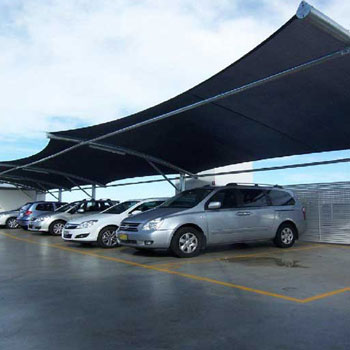
Design: Can be optimized to offer maximum protection against the weather to the vehicles with minimum support, so that there is clear space between cars to move about.
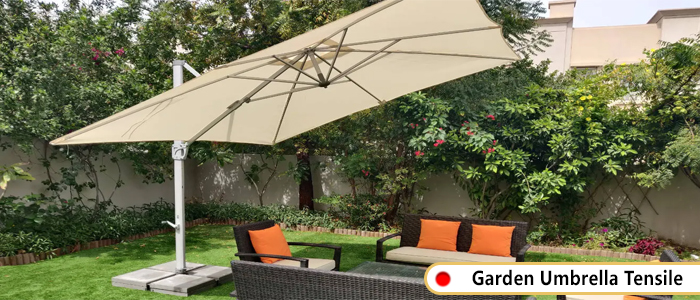
Benefits: It is quicker to lay down than concrete decks, and it lets the sunshine in, which lowers heat retention, and in many cases, it is more affordable to cover a large space. - Shade Sails & Canopies
Design: The most basic is where the fabric is stretched between multiple anchor points.
Most suitably: Residential gardens, schoolyards, and commercial shade systems. - Complex Custom Forms
Design: Free form, sculptural, and has been enabled by the development of 3D modeling and engineering.
Best Suited: Traditional architectural buildings, pavilions, and art installations.
Benefits of Selecting Tensile Structures
- Aesthetic Appeal: Cuts distinctive contemporary silhouettes.
- Economical in long spans: It uses less structural steel than the traditional roofs to cover a large area.
- Natural Lighting: Naturalistic fabrics eliminate the use of artificial lighting during the day.
- Durability: Good-quality membranes may be used where they last 25 years and require little maintenance.
- Fast Construction: Pre-fabricated parts can be assembled faster on site.
Some of the Main Issues to Note in Your Project
- Purpose: Is it to provide shade, complete protection, or make a statement?
- Location: Design and fabric choice will be affected by wind, snow loads, and sun exposure.
- Budget: PVC-polyester is an entry-level product, whereas PAL-700 and PAL-100 are long-term and expensive investments.
- Engineering & Fabrication: The effectiveness of a tensile membrane structure depends on a high degree of engineering and quality fabrication. The collaboration with the professional specialists, such as Global Tensiles, will guarantee that the construction will be safe, robust, and of the required specifications.
Conclusion
Tensile structures are the ideal unification of art and engineering. You may require a fancy tensile walkway building on a university campus, an effective tensile vehicle parking design in a development, or a spectacular pavilion; the suitable mix of fabric and shape can make your dream a reality.
Recent Blog